Victoria Climate
Victoria climate range is broad despite its small size, from the snowfields in the north east where the temperatures can be below freezing, to the dry semi-arid Mallee area of the north west where it can get very hot.
The southern position of Victoria means it tends to be a bit cooler and wetter than the other Australian mainland states
The Victoria weather of the coastal plains and along the coast is generally mild and cool. This is the region of Victoria where Melbourne is located
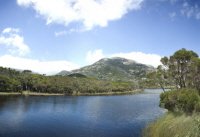
The Great Dividing Range extends through the centre of Victoria and has a cooler mountain climate.
The Victorian Alps are part of the Great Dividing Range and are the coldest part of the Victoria climate, in winter the temperature can get below 0 degrees Celsius in the highest parts of the ranges.
The hottest Victoria weather region is the semi-arid north west where the average daily temperature in summer is over 30 degrees Celsius.
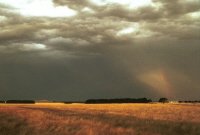
Rain falls more frequently in winter than in summer in Victoria, with Victoria being the 2nd wettest Australian state after Tasmania.
The highest recorded maximum temperature in Victoria was recorded at Mildura on the 10th of January 1939, it was 47.2 degrees Celsius.
The lowest recorded minimum temperature in Victoria was recorded at Mount Hotham on the 13th of August 1947, it was minus 12.8 degrees Celsius.
Melbourne Weather
Melbourne weather can change quite a bit
But generally Melbourne has a moderate oceanic climate with warm to hot summers, mild springs and autumns, and cool winters.
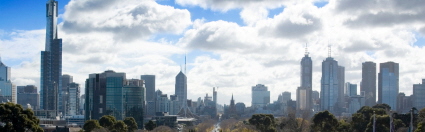
Summer weather in Melbourne is generally mild with warm to hot days.
The average daily maximum temperature is around 28 degrees Celsius, but it does get much hotter at times.
The average daily minimum temperature is around 13 to 14 degrees Celsius.
Winter weather in Melbourne is generally cool but not normally too cold, although it is colder than most other capital cities in Australia.
The average daily maximum temperature is around 13 degrees Celsius.
The average daily minimum temperature is around 5.5 to 6.5 degrees Celsius.
The highest recorded maximum temperature in Melbourne was recorded on the 13th of January 1939, it was 45.6 degrees Celsius.
The lowest recorded minimum temperature in Melbourne was recorded on the 21st of July 1869, it was minus 2.8 degrees Celsius.
Go to next climate page: Queensland Climate
Return from Victoria Climate to Australian-Information-Stories home page


